Showing posts with label minister. Show all posts

Monday, April 4, 2011

Over a lakh children in Delhi still out of school

New Delhi: More than one lakh children in the national capital are still out of school, a report by the human resource development ministry said as the Right to Free and Compulsory Education (RTE) Act completed a year on Friday since its implementation.

The RTE report card which analyzed the primary education scenario in the country was released especially for the occasion.

According to the report, 1,24,022 children in the age group of six to 14 were out of school in Delhi, as per a survey in 2009. Across the country, the out-of-school children figure stands at 81,50,619.

"It's unfortunate that 81,50,619 children in the age group of six to 14 are still out of school. We have to bring all those children to school," Human Resource Development Minister Kapil Sibal said while releasing the report.

On a positive note however, Delhi has scored quite well in other parameters.

For instance, as compared to national figure of pupil-teacher ratio of 32, in Delhi the ratio is 28. Then, at the national level the percentage of teachers without professional qualification is 21, but in Delhi it stands at one.

Water drinking facility is present in 100 percent schools in Delhi. 79 percent schoolshere have girls toilets, 71 percent schools have ramps for disadvantaged students, 75 percent schools have playground and 98 percent have boundary walls.

Delhi is one of the 11 states which have constituted a state commission to monitor implementation of the RTE Act. Notification of the state rules however is still "in process", the report said.

A total of 16,84,425 students have been enrolled in the primary level in Delhi and 9,82,164 in the upper primary level. Delhi has 3,034 government and aided schoolsand has 57,777 teachers in these schools.

Wednesday, March 9, 2011

UGC-NET launches e-certificate

Candidates appearing for the UGC-NET will get the qualifying certificate within six days now with the University Grants Commission launching the e-certificate. The Minister for Human Resource Development (HRD) Kapil Sibal launched the service recently.

The process of issuing the UGC-NET qualification certificate to successful candidates normally takes around six to eight months, a cause of concern both to UGC and to the students. However, these E-certificates will cut down the time lag for issuing the certificate to just six days. Similarly, whenever an institution writes to UGC for verification of authenticity of the NET certificate presented by the candidates, the authenticity of the certificate can now be done within a span of 24 hours as against the earlier four months.

The UGC has already initiated steps for online registration of the NET examination so that all the necessary information with regard to the candidates is captured, including their photographs, at the time of registration itself. The information thus captured is proposed to be used for the award of these e-certificates once the results are announced.

The UGC has also released a compendium of UGC schemes where the 63 schemes of the UGC have been synoptically profiled, covering the objectives of each scheme, the criteria for becoming eligible to receive financial assistance from the UGC, the operational tenure of the scheme, process of selection followed in approving the proposals, and finally the quantum of financial assistance that can be provided to execute the scheme.

Wednesday, March 2, 2011

France wants to 'reinvent' English language teaching from age three

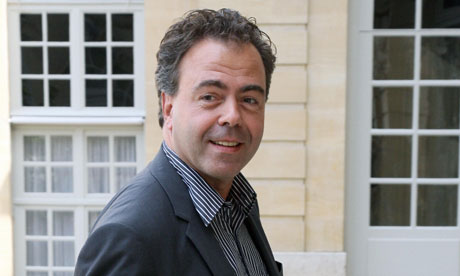
Children could start learning English in France's nursery schools from age three as part of a strategic review of language education launched by education minister Luc Chatel.

Chatel announced last month that he wanted to "reinvent the learning of English" in schools. He said a team of specialists were examining a range of options aimed at boosting young people's skills in English and other foreign languages.

Specialists would investigate starting learning from age three, he said. "We have been experimenting with this and there have been some good results," he said.

He also wants to develop online language learning and to encourage more secondary school children to go on language-study trips to English-speaking countries.

But the minister's commitment to high-quality language teaching has been called into question. As part of cuts to education budgets announced last month, schools are likely to lose up to 1,000 specialist language assistants from classrooms from the start of the next academic year.

According to the Le Monde newspaper, educationalists are sceptical about using computers for language learning from such a young age. "Putting three-year-olds in front of computers?" asked Christian Chevalier, general secretary of the SE-Unsa teachers' union. "We are not opposed to developments in teaching that are useful. But you need a human to impart knowledge. Only a high-quality teacher who can speak English can teach the language," he said.

Saturday, February 26, 2011

Life-insurance-cum-endowment scheme for school teacherss under examination in Planning Commission


New Delhi: The Planning Commission has acknowledged that school teachers are important stakeholders in our country's development and intimated that the proposal to introduce a life-insurance-cum-endowment scheme for school teachers is under examination in the Planning Commission. Proposal for health insurance for the school teachers has not been sent by HRD Ministry to the Planning Commission.

This information was given by the Minister of State for Human Resource Development Smt. D. Purandeswari, in a written reply to a question, in the Lok Sabha today.

Monday, February 14, 2011

Tunisia: Education resumes while activists continue to mobilise


Students and teachers across Tunisia have resumed their classes after weeks of protests that brought down the government of former President Ben Ali, but the debates continue about how to shape a new Tunisia.
Prior to the resignation of former President Ben Ali his Education Minister had shut down all education institutions during the exam period.
With a new Education Minister in post, schools have now resumed, and for the past two weeks, despite the insecurity and impassioned discussion on the shape of democratic developments in Tunisia, most students are able to take their exams.
In acknowledgement of Tunisians placing a high value on education, all students who missed classes, either because they were unable to return from the safety of their rural villages or because they were involved in protest action for or against the transition government, will have the opportunity to take their exams at a later date.

Eye witness accounts tell the story of insecurity within colleges and across the country. Higher education institutions are quieter because many older students have been engaged in debates about the current reforms. Civil society groups and the judiciary continue to be locked in debates about the next steps for Tunisia.

The transition President has been appointed, and not elected. The parliament continues to be composed of representatives from Ben Ali's dominant political party who are considered illegitimate by the people, but the infrastructure is not in place to enable parliamentary elections to happen quickly.

The opposition movement began as a popular uprising with unemployed young people and the energetic spirit of mobilisation continues to be active. Passionate debates about reform have replaced protests on the streets. Freedom of expression is being exercised fully, especially within universities.

While the transition government is not universally accepted, the old cadres have been ousted and new ministers with expertise have been coopted. However, the political experience is taking its toll. On 9 February, teachers from the primary and secondary education sector staged demonstrations to protest at offensive statements made by some newly appointed ministers.
Ordinary citizens, not just the intellectuals, want to understand how the democratic reforms can be implemented. There are reflections on what to keep from the 1958 Republican Constitution, what role civil society organisations can and must play. The trade union centre, UGTT, which played a major role in coordinating the so-called Jasmin Revolution across the country is represented in many commissions which are now developing new policies.
People are feeling inspired. They feel that they finally have a real say and want to be sure to take the right steps to preserve the integrity of these historic events.
 
source:http://www.ei-ie.org/en/news/show.php?id=1512&theme=ei&country=tunisia

Thursday, February 10, 2011

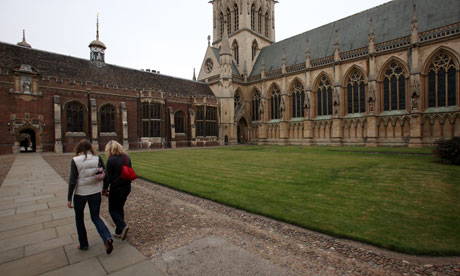
Oxford and Cambridge to join £9,000 club on fees

Students whose family income is below £25,000 would pay £6,000 and receive a maintenance bursary of up to £1,625
 
Cambridge university wants to triple fees in autumn next year.
Senior managers at Oxford and Cambridge universities are intent on charging £9,000 a year in tuition fees, the maximum allowed, it has emerged.

A consultation paper shows Cambridge wants to almost triple fees to £9,000 as soon as it can in autumn next year. The university will charge the maximum of £3,375 for this autumn.

Students whose family income is below £25,000 would pay £6,000 and receive a maintenance bursary of up to £1,625, under plans from Cambridge's working group on fees, published internally for consultation. Means testing will taper this £3,000 reduction to zero when family income exceeds £42,000.

Oxford's pro-vice-chancellor, Tony Monaco, has said fees of less than £8,000 would lose the university money because of national cuts to teaching and other grants. He told a Congregation, a formal meeting of senior members of the university, that Oxford subsidised undergraduates by £80m.

"That is already straining research and infrastructure ... Were we to charge £9,000, the additional income would be £14m a year." This would be used to improve outreach activities and waive fees for the poorest students.

The university calculates that to waivefees for the poorest by £3,000, would be the equivalent of charging all undergraduates £8,500. Oxford will make its decision on fees in March.

David Willetts, the universities minister, has said fees of £9,000 will be allowed only in "exceptional circumstances". MPs voted to raise tuition fees in December, after the Lib Dems pledged in their manifesto to scrap fees. The government loans students the fees until they graduate and are earning £21,000 a year.

Aaron Porter, president of the National Union of Students, said: "We can now expect a race to the top now as universities rush to gain kudos by joining the '£9,000 group' as quickly as possible. How long before the most expensive start asking for the freedom to charge even more?"

The Cambridge report argues that even at £9,000, the university is still "carrying the burden of a significant loss per student … To charge less than the maximum would be fiscally irresponsible. Most if not all of our peers will charge the maximum."

A university spokesman said: "This report has been published online for consultation … It follows due consideration by a working party made up of senior academic, college and student representatives."

Universities are expected to raise fees to at least £6,000. They have to submit their plans to the government's Office for Fair Access, which can decline proposals.

New universities say they will be forced to raise fees to more than £6,000 because of cuts to teaching funds, and are concerned that students from low-income families will not be able to afford them.
Language shortage

Universities must urgently address the country's shortage of linguists, the British Academy warns. There is a growing mismatch between supply and demand in language skills, it argues in a report – Language Matters More and More. The situation has worsened since the academy's previous warning in 2009, it said. In 2010, 57% of UK pupils took no language at GCSE, while the number of A level language candidates fell by a quarter. There is a higher proportion of privately-schooled students on language courses than ever.
 
source:http://www.guardian.co.uk/education/2011/feb/09/oxford-cambridge-9000-fees

The Eric Friedheim Library: Events and Classes

Business Affiliate Programs •  Sale •  Personals •  Advertising •  Shopping

LinkWithin

Related Posts Plugin for WordPress, Blogger...