Showing posts with label language. Show all posts

Tuesday, March 15, 2011

IGNOU to introduce short-term Russian course

The India Gandhi National Open University (IGNOU) would soon be introducing a short-term Russian language and culture course, an official said.

IGNOU's School of Foreign Languages (SOFL) has collaborated with the Russian Centre of Science and Culture (RCSC) here to introduce the two-month course, the official said.

According to RCSC's deputy director (Culture & Information) Yelena Shtapkina, the Russian language taught in many universities of the world is not up to the Russian standard. As a result, the candidate has to pass an additional test to qualify for a job, she said.

RCSC is ready to facilitate appropriate teaching of Russian language to meet the requirements by providing native teachers to IGNOU under mutually agreed upon terms and conditions.

"Classes would be held twice a week on Fridays and Tuesdays in the campus and it has been made compulsory for all faculty members of SOFL and will also be offered to all faculty members and officers of IGNOU," said SOFL director G. Chaudhuri.

Wednesday, March 9, 2011

New test for teacher recruitment

At a time when there is an ongoing debate about the urgent need to restructure the teacher education programmes in the country, would-be teachers in schools will now have to write an eligibility test conducted by either the Centre or the State governments before getting an appointment letter.

Called the Teacher Eligibility Test (TET) this examination is external and additional to any other qualification that an aspiring teacher would have. According to a National Council for Teacher Education (NCTE) document (this can be accessed at the web site www.ncte-india.org) the rationale for the TET is

It would bring national standards and benchmark of teacher quality in the recruitment process.

It would induce teacher education institutions and students from these institutions to further improve their performance standards

It would send a positive signal to all stakeholders that the government lays special emphasis on teacher quality.

The TET would be conducted by a “suitable professional body” designated by the government concerned. All questions would in the MCQ mode, and each will fetch one mark. There would be four alternatives given out of which one would be the correct answer. There would be no negative marking in TET.

Those wishing to get appointed as teachers for Classes I -V would have to appear only for paper one of TET. This one-and-a-half-hour examination would have 30 questions each on Child Development and Pedagogy, language-1, language-2, mathematics and environmental studies.

Questions in Child Development and Pedagogy would be all about the “educational psychology of teaching and learning relevant to the age group 6-11 years,” the NCTE document notes, “They will focus on understanding the characteristics and needs of diverse learners, interaction with learners and the attributes and qualities of a good facilitator of learning.”

The ‘language-1' questions would focus on the proficiencies related to the medium of instruction in each State.

Language-2 will have questions from among the list of languages prescribed in the application form.

The questions on mathematics and environmental studies would give emphasis on the “concepts, problems solving abilities and pedagogical understanding of the subjects.” The questions would be evenly distributed over the syllabi prescribed by the respective governments.

For those wishing to get appointed as teachers in classes six to eight TET paper-2 is the examination to take. Here, it is compulsory to answer the questions on child development and on the two language options. For the math and science teacher there would be sixty MCQs of one mark each, for the social sciences teacher there would be sixty MCQs of one mark each. Other teachers can answer either the mathematics set or the social sciences set. The question papers shall be bilingual; in English and in a language decided by the State government.

Those who wish to be considered for appointment to any class from one to eight would have to appear for both paper one and two of the TET.

Minimum marks

Only a person who scored 60 per cent or more would be deemed to have passed the TET. Though weight should be given to TET scores during the recruitment process, the NCTE document also makes it clear that passing the TET is only an eligibility criteria and that it does not imply a right to get appointed.

The NCTE has recommended that TET be conducted at least once a year. Each government can decide the validity of a TET; in any case this should not exceed seven years.

Certificate

Each successful candidate shall be given a TET certificate which would incorporate adequate security features and would be electronically generated.

The current thinking is to make TET optional for serving teachers. However, they would be encouraged to write TET just to see where they stand on the skills scale.

Wednesday, March 2, 2011

France wants to 'reinvent' English language teaching from age three

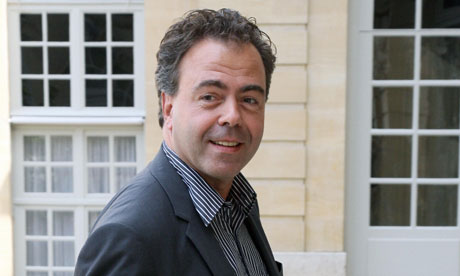
Children could start learning English in France's nursery schools from age three as part of a strategic review of language education launched by education minister Luc Chatel.

Chatel announced last month that he wanted to "reinvent the learning of English" in schools. He said a team of specialists were examining a range of options aimed at boosting young people's skills in English and other foreign languages.

Specialists would investigate starting learning from age three, he said. "We have been experimenting with this and there have been some good results," he said.

He also wants to develop online language learning and to encourage more secondary school children to go on language-study trips to English-speaking countries.

But the minister's commitment to high-quality language teaching has been called into question. As part of cuts to education budgets announced last month, schools are likely to lose up to 1,000 specialist language assistants from classrooms from the start of the next academic year.

According to the Le Monde newspaper, educationalists are sceptical about using computers for language learning from such a young age. "Putting three-year-olds in front of computers?" asked Christian Chevalier, general secretary of the SE-Unsa teachers' union. "We are not opposed to developments in teaching that are useful. But you need a human to impart knowledge. Only a high-quality teacher who can speak English can teach the language," he said.

Thursday, February 10, 2011

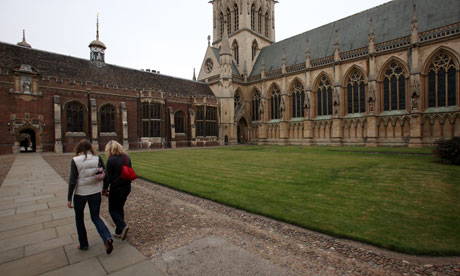
Oxford and Cambridge to join £9,000 club on fees

Students whose family income is below £25,000 would pay £6,000 and receive a maintenance bursary of up to £1,625
 
Cambridge university wants to triple fees in autumn next year.
Senior managers at Oxford and Cambridge universities are intent on charging £9,000 a year in tuition fees, the maximum allowed, it has emerged.

A consultation paper shows Cambridge wants to almost triple fees to £9,000 as soon as it can in autumn next year. The university will charge the maximum of £3,375 for this autumn.

Students whose family income is below £25,000 would pay £6,000 and receive a maintenance bursary of up to £1,625, under plans from Cambridge's working group on fees, published internally for consultation. Means testing will taper this £3,000 reduction to zero when family income exceeds £42,000.

Oxford's pro-vice-chancellor, Tony Monaco, has said fees of less than £8,000 would lose the university money because of national cuts to teaching and other grants. He told a Congregation, a formal meeting of senior members of the university, that Oxford subsidised undergraduates by £80m.

"That is already straining research and infrastructure ... Were we to charge £9,000, the additional income would be £14m a year." This would be used to improve outreach activities and waive fees for the poorest students.

The university calculates that to waivefees for the poorest by £3,000, would be the equivalent of charging all undergraduates £8,500. Oxford will make its decision on fees in March.

David Willetts, the universities minister, has said fees of £9,000 will be allowed only in "exceptional circumstances". MPs voted to raise tuition fees in December, after the Lib Dems pledged in their manifesto to scrap fees. The government loans students the fees until they graduate and are earning £21,000 a year.

Aaron Porter, president of the National Union of Students, said: "We can now expect a race to the top now as universities rush to gain kudos by joining the '£9,000 group' as quickly as possible. How long before the most expensive start asking for the freedom to charge even more?"

The Cambridge report argues that even at £9,000, the university is still "carrying the burden of a significant loss per student … To charge less than the maximum would be fiscally irresponsible. Most if not all of our peers will charge the maximum."

A university spokesman said: "This report has been published online for consultation … It follows due consideration by a working party made up of senior academic, college and student representatives."

Universities are expected to raise fees to at least £6,000. They have to submit their plans to the government's Office for Fair Access, which can decline proposals.

New universities say they will be forced to raise fees to more than £6,000 because of cuts to teaching funds, and are concerned that students from low-income families will not be able to afford them.
Language shortage

Universities must urgently address the country's shortage of linguists, the British Academy warns. There is a growing mismatch between supply and demand in language skills, it argues in a report – Language Matters More and More. The situation has worsened since the academy's previous warning in 2009, it said. In 2010, 57% of UK pupils took no language at GCSE, while the number of A level language candidates fell by a quarter. There is a higher proportion of privately-schooled students on language courses than ever.
 
source:http://www.guardian.co.uk/education/2011/feb/09/oxford-cambridge-9000-fees

Tuesday, January 25, 2011

For better proficiency in foreign languages


Many options are available to study the French, Italian and Japanese languages.

— File Photo 

For correct intonation: Language labs play a major role in helping students get their pronunciation right.
We had in these columns during the past weeks listed 19 universities/ centres that provide good facilities for the study of foreign languages in India. Let us now look at a few more of them.
Alliance Francaise
Web site: www.afindia.org.
Alliance Française has a large network of more than a thousand associations in 136 countries, delivering French language courses to a total of 4,60,000 students. It also aims at cultural interaction among French-speaking peoples. There are 16 Alliances Françaises in India (Ahmedabad, Bangalore, Bhopal, Chandigarh, Chennai, Goa, Hyderabad, Jaipur, Karikal, Kolkata, Mahe, Mumbai, New Delhi, Pondicherry, Pune and Trivandrum).
The DELF and DALF examinations certify the students' levels in French. Teaching of the French language at the Alliance Française is progressive. They offer all levels of learning starting from level 1 (A1) to level 6 (C2).
The student is invited to actively participate in the class and to develop his powers of observation, thinking, and communication, and also use the four skills: oral and written comprehension, written and oral production. After every level, he continues his learning in the next higher level if authorised by the teacher. He can also have his skills validated by an internationally recognised diploma: the DELF and the DALF.
Sessions of 160 hours (Levels 1-3), 200 hours (Level 4) or 240 hours (Levels 5 and 6) to attain the objectives of each level.
Address of the Chennai centre: Alliance Française de Madras, No.24, College Road, Chennai 600 006; ph: 044-28279803, Web site: www.madras.afindia.org
Indo-Italian Chamber of Commerce and Industry (IICCI) is a non-profit organisation recognised by the Italian government, whose main objective is to promote and enhance trade and economic relations between India and Italy. It conducts classes in the Italian language at its different centres. Web site: www.indiaitaly.com.
Head Office: IICCI - Head Office, Mumbai, Bengal Chemicals Compound
502 Veer Savarkar Marg, Prabhadevi, Mumbai 400025; Ph: 022-24368186, e-mail for language lessons: language@indiaitaly.com.
Italian language courses at Mumbai:
Level I: Beginners Level, morning classes for two hours, three days a week. Duration: two months
Level II: Intermediate level, morning classes for two hours, two days a week. Duration: two months. Similar programmes are available at other centres. There is a third level (advanced) also. Contact details:
Bangalore: Ph: 080-26620318, e-mail: anup.tg@indiaitaly.com
Chennai: Ph: 044-28242399; e-mail:r.cardoza@indiaitaly.
com
Goa: Ph: 0832-2438946; e-mail: c.iuzzolini@indiaitaly.com
Kolkata: Ph: 033-32944677; e-mail:iicci.cal@indiaitaly.
com
The key objectives of the three levels are as follows:
First level, beginner: Understand and use familiar everyday expressions and very basic phrases. Introduce themselves and others. Ask and answer questions on personal details. Interact in a simple way, provided the other person talks slowly and clearly.
Second level, intermediate: Understand sentences and frequently used expressions related to areas of most immediate relevance (eg. very basic personal and family information, shopping, local geography, employment). Communicate on simple and routine tasks requiring direct exchange of information. Describe in simple terms aspects of their background, immediate environment and matters in areas of immediate need.
Third level, advanced: Understand the main points of clear standard input on familiar matters regularly encountered at work, school, leisure, etc. Deal with usual situations likely to arise while travelling in an area where the language is spoken. Produce simple connected text on topics that are familiar or that are of personal interest. Describe experiences and events and briefly give reasons and explanations for opinions and plans.
Students are examined at the end of each level. After the completion of the entire course, the Italian Embassy will award a Diploma.
Indo-Japan Chamber Of Commerce & Industry, No.21, K.B. Dasan Road, Teynampet, Chennai 600 018; Ph: 044-24352010, e-mail: indo-japan@ijcci.com; Web : www.ijcci.com. This promotes educational, cultural and commercial activities between Japan and India.
The Chamber conducts Japanese Language Classes throughout the year to prepare students for the different levels of the Japan Foundation's Japanese Language Proficiency Test (JLPT). Further, there are need-based conversation classes, both short-term and long-term, for the benefit of corporate houses. Special Japanese Language Classes are also conducted for students of professional colleges on request.
Distance education programmes are being conducted for the benefit of outstation students, even for appearing in JLPT. The course, among other things, effectively enables students to acquire basic skills in Japanese conversation. Interested candidates have the option to join a four-month advanced intensive Japanese conversation program, with four contact classes on Sundays.
JLPT lays stress on knowledge of Japanese including vocabulary, grammar, and competence in practical communication. These are measured through tests in language knowledge (vocabulary / grammar), reading and listening. The JLPT is offered in five levels (N1, N2, N3, N4, and N5). The easiest level is N5 and the most difficult level is N1. Levels N4 and N5 measure the level of understanding of basic Japanese mainly learned in the class. N1 and N2 measure the level of understanding of Japanese used in a broad range of scenes in actual everyday life. N3 is a bridging level between N1/N2 and N4/N5.
N5: Ability to read and understand typical expressions and sentences written in hiragana, katakana, and basic kanji / listen and comprehend conversations on topics in daily life, and to grasp information from short conversations spoken slowly.
N4: Abilities in N5 at some more depth.
N3: Ability to understand Japanese used in everyday situations / read slightly difficult writings encountered in everyday situations / listen and comprehend coherent conversations spoken at near-natural speed
N2: Ability to read and comprehend materials written clearly on a variety of topics, such as articles and commentaries in newspapers and magazines as well as simple critiques, and comprehend their contents / comprehend orally presented materials such as news reports, spoken at nearly natural speed.
N1: Ability to read and comprehend writings with logical complexity and/or abstract writings on a variety of topics, such as newspaper editorials / comprehend orally presented materials such as coherent conversations, news reports, and lectures, spoken at natural speed
The Japan Foundation, 5-A, Ring Road, Lajpat Nagar-IV, New Delhi 110 024 Web: www.jfindia.org.in, is an organization for international cultural exchange. It promotes Japanese language education, through various activities including teacher training.
The Ramakrishna Mission Institute of Culture, School of Languages, Golpark, Kolkata – 700029; Ph: 0332464 1303; e-mail: rmic@vsnl.com,
Web site: www.sriramakrishna.org
Junior courses of one year each, in French, German, Italian, Portuguese, Spanish, Arabic, Chinese, Japanese, Latin, Ancient Greek, and Persian
Senior Certificate courses of one year each, in French, Italian, Portuguese, Spanish, Arabic, Chinese, Japanese, Latin, and Persian
Advanced Certificate courses of one year each in Chinese, Japanese, French and Spanish.
Senior and Advanced Certificate courses, each of one year, in German.
Communicative Certificate courses, each of six months, in Chinese, French, German, Korean, Russian and Spanish.

The Eric Friedheim Library: Events and Classes

Business Affiliate Programs •  Sale •  Personals •  Advertising •  Shopping

LinkWithin

Related Posts Plugin for WordPress, Blogger...