Showing posts with label news. Show all posts

Friday, April 1, 2011

Sorry, Seniors: College Admission Rates Are Down This Year

NewsFeed is sure there are plenty of high school seniors already sweating over the arrival of their college acceptance letters (or lack thereof), without us adding this disappointing news: Ivy League admission rates are way down this year.
Student newspapers at Cornell, Yale, Columbia, UPenn, Dartmouth, Brown, Princeton and Harvard are all reporting that as application rates have soared, admission rates have dropped. (Do colleges discriminate against poor whites?)
While some of the school's admission rates don't seem too bad - Cornell's accepted 18% of this year's applicants - many of the Ivies have turned away more than 90% of those who applied. Harvard and Columbia have the most daunting numbers, with 6.2 and 6.4 respective admission rates.
The Atlantic Wire has rounded up what most of the school's have been saying about the acceptance rates and (unsurprisingly) school officials are putting a positive spin on what the low numbers mean: they simply received far more outstanding applications this year.
Which, of course, is an extra ego boost for those who are lucky enough to get that acceptance letter. But for those who don't make the cut, well, there's not much anyone can say to ease the disappointment of not getting into your first choice school. On that note, good luck!

source:http://news.yahoo.com/s/time/20110401/us_time/httpnewsfeedtimecom20110331sorryseniorscollegeadmissionratesaredownthisyearxidrssfullnationyahoo;_
ylt=AukL9.BZfr8__lR2AQg6vbRQXs8F;_ylu=X3oDMTU4ZXU3a21tBGFzc2V0A3RpbWUvMjAxMTA0MDEvaHR0cG5ld3NmZWVkd
GltZWNvbTIwMTEwMzMxc29ycnlzZW5pb3JzY29sbGVnZWFkbWlzc2lvbnJhdGVzYXJlZG93
bnRoaXN5ZWFyeGlkcnNzZnVsbG5hdGlvbnlhaG9vBHBvcwMxBHNlYwN5bl9wYWdpbmF0ZV9zd
W1tYXJ5X2xpc3QEc2xrA3NvcnJ5c2VuaW9ycw--

Tuesday, March 22, 2011

GLOBAL: What international students want to study

Predicting where future international students will come from and what subjects they go abroad to study has become a mini-industry in receiving countries such as Britain and Australia, where some courses are highly dependent on overseas student fees.

Delegates and experts at the British Council's Going Global conference, held in Hong Kong from 11-12 March, agreed that demand for overseas courses from Asian students will carry on rising.

"Overall demand for international education will continue to grow in the low single digits in the next decade," said Tony Pollock (pictured), Chief Executive of IDP Education, an international student placement service.

However, subject choices may be changing as sending countries like China and India become more affluent, students from Singapore prefer to study at their own excellent universities and Malaysia reduces the number of government scholarships for students on expensive overseas courses.

Medicine and related courses in the West have long been popular with students from India, Malaysia and Hong Kong, while business-related degrees and engineering have been the top choice for students from China, Taiwan and Vietnam.

This is according to a survey of 5,000 prospective international students in 14 countries by Hotcourses, a web-based company that advises students on course choice internationally. 

Students from Pakistan are looking for high quality courses in engineering and technology, and Indonesian students are looking at the natural sciences. 

South Korean students, on the other hand, go abroad to study creative arts and design, while students from India and Malaysia are interested in social sciences and communications, said Mike Elms, Chief Executive of Hotcourses. 

However, patterns are changing in key markets such as China, which last year sent 440,000 students to study abroad, overtaking India as the top sending country.

Prospective students from major Chinese cities may be broadening out the subjects they want to study abroad, according to research by the British Council - information which could also be important for decisions by a number newly emerging regional higher educational hubs on what courses to offer to attract international students. 

The British Council's Education Intelligence Unit research into prospective students' intentions in the coming years found that there have been shifts in the most popular subjects chosen for study in the UK in the last two to three years. 

Students from China are still most likely to study business administration and engineering and technology at overseas universities, but growth in the number of students selecting these subjects is slowing while students from China wanting to study mass communication and documentation, and creative arts and design, has shown much bigger growth. 

"We were trying to capture the student decision-making process before the student embarks on a course," said Janet Illieva, head of research at the British Council in Hong Kong. "For China we have seen decreased demand for engineering."

"There has been a shift in demand towards non-traditional subjects in China at the city level," she said. This was most evident in large cities such as Beijing and Shanghai. "We think this is because of the rise in the middle class in these cities. While in the medium-sized cities, there is definitely a rise in those who say they want to study engineering." 

For example, one in four prospective international students in the city of Shenyang want to pursue engineering. In Nanjing, Xi'an and Chengdu the rise was 17% to 18%, taking over where Beijing was a decade ago. These are also cities where there has been a rise in heavy industry and manufacturing, Illieva said.

Students from China saying they want to study mass communication has risen by 81% since 2008, a possible reflection of the burgeoning use of the internet. Prospective Chinese students wanting to study creative arts has risen by 54% during the same period, compared to 25% to 29% growth for business and engineering. Architecture, building and planning has seen 35% growth in interest from China in the last two years. 

Mass communication has soared to become the third most popular choice for Chinese students wanting to study overseas, rising from 8th most popular in 2006-07. Creative arts has risen to fifth place behind social studies compared to ninth place in 2006-07.

The findings have implications for universities hoping to replace declining applications at home with students from overseas, particularly in science and engineering. 

But Hotcourses' Mike Elms said the key motivator for students looking for courses abroad is "to get a better education. They want a higher quality course than is available to them in their own (education) market," he said.

Monday, March 14, 2011

Top in Sri Lanka winner collects award in Cambridge

We recently had an opportunity to meet a former Cambridge student from Stafford International School, Sri Lanka who is now studying at the University of Cambridge.

In November last year, Ayushka Nugaliyadda won an Outstanding Cambridge Learner Award for her exceptional performance in her Cambridge International A Level Psychology exam. She was unable to attend the ceremony in Sri Lanka, and so we presented the award to her in Cambridge instead!

Our photograph shows Ayushka receiving her Top in Sri Lanka award from former member of the University of Cambridge International Examinations Syndicate, Dr John Guy OBE (left) and Warden of Robinson College, David Yeates (right).

Ayushka, who is studying Economics at Robinson College, says she chose to study Cambridge International A Level Psychology in order to broaden her outlook. She also took exams in Accounting, Economics, and Maths with Statistics – achieving A and A* grades in all subjects – and so wanted to study a subject that did not have a business focus. She said the University found her subject combination unusual, but she had no problem applying and they recognised her qualifications.

So how did she find her Cambridge International A Level studies? ‘I liked the syllabus’, she said, ‘it was diverse at International AS Level and became even broader in the second year.’

Ayushka only applied to UK universities, however she would like to return to Sri Lanka to pursue a career in developmental economics. On the day we met, she had had her first lecture in developmental economics and found that her psychology studies were relevant to the topic. She said: ‘The lecturer explained that psychological factors – such as happiness – are a consideration in developmental economics. It is surprising to find how my psychology studies will help me with my economics degree.’

Ayushka said it felt good to win her Outstanding Cambridge Learner Award. We wish her all the best for her future studies and career.

Friday, March 11, 2011

USA: Senators restrict public-sector and teacher unions' rights

Republicans in the Wisconsin state senate have approved a regressive plan to strip public-sector and teacher trade unions of most of their collective bargaining rights.

The US state's 14 Democratic senators had sought to prevent the move by fleeing the state, leaving the chamber short of the number needed for a vote, but the Republicans used a rarely used procedural move to allow them to vote on the measure in committee instead.

Crowds of protesters from EI's U.S. affiliates, the AFT and NEA, swamped the state capitol in Madison following the vote.

"The whole world is watching," they shouted as police guarded the entrance to the senate chamber. In the senate gallery, spectators shouted "you are cowards" as voting took place.

The plan has prompted weeks of protests in support of public workers and teachers.

The Republican-controlled state assembly is due to take up the legislation on Thursday morning, after which it will go to Republican Governor Scott Walker for signature.

Mr Walker argues the move is needed to help tackle a $3.6bn budget gap over the next two years but the education unions have said it is intended to weaken the power of the unions, which tend to back the Democrats in elections.

The Democrats had called for the Republicans to compromise over public-sector unions' bargaining rights.

But Mr Walker's proposal was approved by a special conference committee after it was stripped of financial measures, meaning that a quorum was no longer needed in the Senate. No Democrats were present to vote against the legislation. Republican Senator Dale Schultz cast the only 'no' vote.

In a statement published on his website, Governor Walker said: "I applaud the legislature's action today to stand up to the status quo and take a step in the right direction to balance the budget and reform government."

He added that the state's Democratic senators - who fled to neighbouring Illinois nearly three weeks ago to block a vote - had had plenty of chances to come back to Wisconsin and act.

Democratic senate minority leader, Mark Miller, said the Republicans had shown disrespect for the people of Wisconsin and their rights: "Tonight, 18 senate Republicans conspired to take government away from the people. Tomorrow we will join the people of Wisconsin in taking back their government."

State unions had said they would agree to Mr Walker's proposed changes to their benefits - which would amount to an eight per cent pay cut - as long as they retained collective bargaining rights.

National Education Association President, Dennis Van Roekel, said: “These are actions more fitting for comic book arch-villains. A new crop of state leaders have launched blistering attacks on working families disguised as budget and education reforms, and many have sought to strip workers’ rights to have a voice through their union.”

EI General Secretary, Fred van Leeuwen, said: “Educators around the world are behind their U.S. colleagues, and strongly condemn this assault on trade union members’ basic right to collective bargaining.

“Those political leaders who attack education workers with such regressive moves, fail to understand that successful education reform cannot be achieved without the involvement and consent of teachers, education workers and their school communities. EI will make this point, among others, to ensure that the teacher voice is heard at next week’s International Summit on the Teaching Profession in New York, where we will advocate for a strong and respected teaching workforce in all countries.”

Wednesday, March 9, 2011

Making human-like robots for easier interaction with people

Researchers at Georgia Institute of Technology have found that when robots move in a more human-like fashion, people find it easier to interact with them and mimic them.

"It's important to build robots that meet people's social expectations because we think that will make it easier for people to understand how to approach them and how to interact with them," said Andrea Thomaz.

For the study, Thomaz and student Michael Gielniak asked how easily people could recognize what a robot called Simon was doing by watching its movements.

"Robot motion is typically characterized by jerky movements, with a lot of stops and starts, unlike human movement which is more fluid and dynamic," said Gielniak.

"We want humans to interact with robots just as they might interact with other humans, so that it's intuitive."

They asked humans to perform the movements they saw Simon making.

"We found that this optimization we do to create more life-like motion allows people to identify the motion more easily and mimic it more exactly," said Thomaz.

In future work, the pair plan on looking at how to get Simon to perform the same movements in various ways.

"So, instead of having the robot move the exact same way every single time you want the robot to perform a similar action like waving, you always want to see a different wave so that people forget that this is a robot they're interacting with," said Gielniak.

The research was presented at the Human-Robot Interaction conference in Lausanne, Switzerland.

Ajmer blast: CBI files report on Aseemanand statement's leak


 The Central Bureau of Investigation (CBI) Tuesday filed a report before a Delhi court on how the confessional statement of Hindutva activist Swami Aseemanand - allegedly involved in the 2008 Ajmer blast - was made public.
The CBI submitted its report before Additional Chief Metropolitan Magistrate Sanjay Bansal and said that it had been established that the statement was not leaked due to any act of its officials.
A journalist, who got this confessional statement published, stated during the enquiry that he had 'obtained the copy of the confessional statement from one of his advocate sources', the CBI said.
'However, he has refused to divulge the particulars of this source during the enquiry,' the CBI added.
The court said that the CBI has filed its report, but it had asked the director of CBI to file it. 'Why is he not here?'
The CBI earlier had filed a two-page report before the court refuting the claim by Rashtriya Swayamsevak Sangh (RSS) activist Devender Gupta accusing the probe agency of leaking the confessional statement to the media.
A petitioner has sought registering a police complaint against a CBI officer and Tehelka magazine owner and editor for making public Aseemanand's confession to a court about his alleged role in the Ajmer blast case.
Gupta, arrested for his role in the 2008 Ajmer Dargah blast, contended that an offence of a serious nature had been committed with the leakage of the confession made by Aseemanand accepting that Hindu activists were to blame for a string of bombings in the country.
The confession was recorded in Delhi by a metropolitan magistrate Dec 18 last year.
Counsel for Gupta, Anupam Sharma and Satish said the CBI admitted that the leak is established.
'Therefore, investigation is now required in this case and FIR (first information report) should also be lodged against them as to how it happened,' said Sharma.
The matter would come up for hearing March 19.
source:news.yahoo.in

Thursday, March 3, 2011

International Women’s Day (8 March) - a chance to tackle gender disparities in education

“This year’s International Women’s Day is inspired by the theme of ‘Equal access to education, training and science and technology: Pathway to decent work for women.’ This goes to the heart of UNESCO’s mission.”
--(Irina Bokova, Director-General of UNESCO)

Concerning equal access to education how do women and girls fare? There has been undoubted progress – more girls are enrolled in school than ever before, from primary to tertiary education. Gender parity in primary school enrolment has greatly improved in the countries that started the decade with the greatest gender gaps. However, two-thirds of the world’s 796 million illiterate adults are women and discrimination still continues: less than 40 percent of countries provide girls and boys with equal access to education and more than 55% of out-of-school children are girls. Special efforts – from recruiting female teachers to making schools more girl-friendly – are needed to redress the balance.

Girls’ and women’s education has a positive impact on the achievement of all the MDGs, from improved health and better prevention against HIV and AIDs to higher income. UNESCO emphasizes a gender-sensitive approach and works with Member States and partners to increase women’s literacy, develop curricula that challenge gender stereotypes and policies that promote of them participation in secondary and technical and vocational education. Learning materials about HIV and AIDS give girls and women the knowledge and skills to cope with the pandemic.

Most recently, UNESCO has promoted gender-sensitive approaches to literacy research, engaged in innovative new partnerships with the private sector and focused on the integration of girls into national technical and vocational education and training (TVET) programmes.

Delhi's slum children to get Australian degrees

Delhi's slum children will now be able to study in Australia under an exchange programme between the University of Melbourne and voluntary organisation Asha, officials said here Tuesday.

'This is going to be the first-of-its-kind Asha model as we focus on urban poor, mainly slum children, to give them access to higher education from a country other than India,' Asha founder Kiran Martin said.

A new India-Australia partnership to support the needs of Delhi's urban poor will operate in three areas - research, education and community engagement.

'This is going to be a unique programme in terms of catering to the needs of the urban poor, who can't even afford the basic education. We also aim at finding solutions to the needs of urban poor as we begin interacting with the students,' said Amitabh Mattoo, director of the University of Melbourne's Australia India Institute.

The collaborative programme will fund 40 projects during 2011 across areas such as resource and environment, contemporary India, regional relationships, health, education, economics and business.

'A memorandum of understanding (MoU) between the Australia India Institute, University of Melbourne, and Asha community health and development society has also been signed,' added Martin.

The programme will be launched by Human Resource and Development Minister Kapil Sibal here Wednesday.

Armed conflicts rob 28 million kids of education

New Delhi, March 2 (IANS) Calling it a 'hidden crisis', a UN report has found that armed conflicts are robbing 28 million children of their right to education while subjecting them to sexual violence.

The report, The Hidden Crisis: Armed Conflict and Education, prepared by Unesco warns that the world is not on track to achieve by 2015 the goal of providing education to all that 160 countries signed in 2000.

'In conflict-affected poor countries, 28 million children of primary school age - 42 percent of the world's total - are out of school,' said the report released Tuesday.

It warns that children in conflict-affected poor countries are twice as likely to die before their fifth birthday as children in other poor countries.

'Only 79 percent of young people are literate in conflict-affected poor countries, compared with 93 percent in other poor countries,' it said.

Over 43 million people are reported to have been displaced mostly by armed conflicts though the actual number is probably far higher.

Refugees and internally displaced people face major barriers to education, according to the report.

The report calls for a determined international response to tackle the crisis. 
 

Bangalore most preferred job city for engineering students

NEW DELHI: Seven out of every 10 engineering students in India prefer Bangalore as their 'first job' city, ahead of the capital Delhi, reveals a survey.

According to employability measurement and recruitment firm Aspiring Minds Research Cell, about 72 per cent of the engineering students surveyed voted for Bangalore as the most preferred destination to work in.

"In India, Bangalore is the engineers' Mecca. It offers growth, options and a community of like-minded people. Bangalore has undoubtedly the largest base in terms of IT companies, opportunities and an existing engineering population," Aspiring Minds Founder and Director Himanshu Aggarwal said.

Bangalore was followed by Delhi, which was preferred by 32 per cent of the respondents, while Hyderabad was the favourite among 30 per cent of the students surveyed.

At fourth place is Pune, with 30 per cent of the respondents voting for the city, followed by Chennai, which was favoured by 23 per cent of students.

Mumbai was sixth in the list of preferred cities for engineers.

Regional preferences emerge strongly, as students from the South, West and North of the country voted for Bangalore, Pune and Delhi, respectively, as their favourite city. For easterners, Bangalore was the favourable option. Chandigarh and Mysore also emerged as preferred destinations for engineering students in the survey.

The survey took into account the views of 19,000 engineering students across India. It was undertaken to determine the city preferences of students and allowed the respondents to specify up to three cities. 

Exeter University becomes the first outside Russell Group to charge maximum fees

Exeter has become the first university outside the Russell Group to announce that it will charge the maximum £9,000 fee for a degree from next year, saying it will need the extra income to meet higher expectations from students.

Exeter, which follows Cambridge and Imperial College London in confirming plans to treble fees, also said it would offer fee waivers or bursaries for students from less well-off backgrounds. Ministers have said the maximum fee should only apply in "exceptional circumstances".

David Allen, Exeter's registrar and deputy chief executive, said: "By setting our fees at the £9,000 level we are able to continue to invest in the student experience, and spend a lot more money to bring in more people from less well-off backgrounds.

"We are talking about having more academic staff, improving the staff-student ratio, more contact hours. What we're doing is to try and give the best possible experience to our students."

Exeter is a member of the 1994 group of smaller research-intensive universities, which includes East Anglia, York and Leicester. Its decision will increase pressure on similar universities to opt for maximum fees to maintain their prestige. Some universities in this group are looking at whether to charge varying fees for different degrees.
Universities minister David Willetts said that institutions would only need to charge £6,000 to cover the costs of arts and humanities students, whose courses are cheaper than science or medicine.

He said: "The maximum allowable charge of £9,000 in 2012/13 would actually represent an increase for them of over 40% even after inflation, as against an increase of 20% or so for the other disciplines."
But Exeter said it would have to raise fees simply to maintain the same quality of teaching. Allen said: "Our own calculations show that we would need a fee of at least £7,000 just to stand still.

"I think you have to bear in mind there will be much higher student expectations, they will expect to see more staff, have better facilities, as more of the onus on paying for their education is coming on to them after graduating."

When fee waivers are taken into account, the average tuition fee would be less than £9,000, the university said. The fee announcement does not cover the Peninsula College of Medicine and Dentistry, which is a partnership between Exeter and Plymouth Universities.

The college lecturers' union, the UCU, said that the average fee needed to replace government funding cuts would be £6,863 for universities offering arts and humanities courses to break even. Sally Hunt, the UCU's general secretary, said: "Our own research shows to replace the money he [the government] has cut, the average fee needs to be almost £7,000. The government urgently needs to look again at the severity of its university funding cuts."

Universities could face a change in the law to stop some of them from charging students £9,000 a year if too many institutions are "clustering their charges at the upper end", the government warned last month.

• This article was amended on 2 March 2011. An editing error inserted references to Exeter as outside the top 20 in the Russell Group. This has been corrected.

Source: http://www.guardian.co.uk/education/2011/mar/02/exeter-university-to-charge-top-fees

India rejects US offer for English teachers for Madrassas

The Indian Government has turned down an American offer to provide experts for teaching English in the Indian Madrassas.

The Human Resources Development department has flatly refused the US proposal of sending Americans to teach English to the Madtrassa schools in various parts of the country.

The US proposal, which came through the ministry of External Affairs, has been rejected on the ground that the Indian government does not want to interfere in the functioning of Madrassas. “Our policy is of non-interference. The Indian government does not play any proactive role and simply monitors educational schemes for Muslims through its minority cell,” Times of India reported quoting the HRD sources as saying.

In India many Madrassas, where Urdu is taught, have already started teaching English.

India has about 7,000 registered Madrassas with some 3.5 lakh students on their rolls.

Another reason, though unstated, is the fear of evoking a political outcry.

“US is seen as an aggressor by Muslims. Any attempt to bring American teachers in madrassas would have been seen as interference,” a source was quoted as saying.

Wednesday, March 2, 2011

21st Century Tools for Iraqi School Children: UNESCO Launches Distance Learning

Satellite TV and an online educational resource are two new tools supporting education in Iraq. UNESCO, with the support of the European Union and in cooperation with the Ministry of Education, announced the formal opening of The Iraqi educational Television (Iraqi Edu at Nile Sat) and The Iraqi Curricula Website (www.iraqicurricula.org) at a ceremony in Baghdad on Wednesday the 23rd of February, 2011.

“What make our present era remarkable are the number, variety and importance of means of communication and information in presenting information and ideas, in such easiness and high speed, in addition to the elements of suspense it carries in order to break the routine and benefit from previous experiences that contributed to the process development of the transfer of audiovisuals to the recipient” Minister of Education Dr. Mohammad Ali Tamim said in his speech.
 
Within The Educational TV programming, UNESCO established two TV production / broadcasting studios with a satellite transmission unit, produced 624 TV lessons, provided a total of 725 hours of externally produced TV programs for Iraqi students and produced 24 episodes of Abu Salam Family, an animated series of 24 episodes focusing attention on civic values, gender equality and human rights. In addition, UNESCO established a TV library and trained all the TV station staff each in his own specialty.

The Iraqi Curricula Website is an online resource with links to all relevant educational materials covering learning from primary to secondary schooling. Among the features of the website are resources for literacy, accelerated learning for students who have missed school and need to catch-up, along with teacher guidebooks and all of the Educational TV programs, including The Abu Salam Family series.

“Combined, the website and Educational TV, give school age children, no matter where they are in the world, an opportunity to learn. This is a commitment to learning for the children of Iraq and an investment in Iraq’s future,” said Mohamad Djelid, director of the UNESCO Iraq Office.

Since 2003, Iraq has struggled to resuscitate the education sector after years of neglect. “This commitment to education is about making a down payment on tomorrow,” said Mr. Jerzy Skuratowicz, Deputy Special Representative of the Secretary General of the United Nations, adding, “the progression is simple: education leads to opportunity, opportunity leads to progress, and progress leads to a brighter future for Iraq and the region.”
 
UNESCO, along with UNICEF, UN-Habitat, The World Bank and our Iraqi counterparts, has worked tirelessly to restore the reputation of the educational system that was once the most respected in the Arab world. These two resources immediately address the needs of students who have been unable to regularly attend class due to war or insecurity. The satellite TV programs have a regional footprint and by the nature of the internet, all Iraqis no matter where they live can access educational material and programs from a computer.
 
“The new educational TV will make the official curriculum available to everybody who has access to television. And here we are talking about almost 90 % of the population in Iraq and even more in the Diaspora.” Said Mr. Jobst von Kirchmann, EU - Head of Cooperation.
 
Source:
http://www.unesco.org/en/iraq-office/dynamic-content-single-view/news/21st_century_tools_for_iraqi_school_children_unesco_launches_distance_learning/back/9623/cHash/b0cdb12149/

France wants to 'reinvent' English language teaching from age three

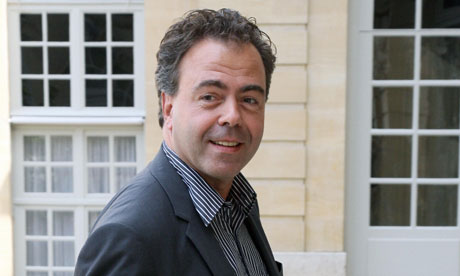
Children could start learning English in France's nursery schools from age three as part of a strategic review of language education launched by education minister Luc Chatel.

Chatel announced last month that he wanted to "reinvent the learning of English" in schools. He said a team of specialists were examining a range of options aimed at boosting young people's skills in English and other foreign languages.

Specialists would investigate starting learning from age three, he said. "We have been experimenting with this and there have been some good results," he said.

He also wants to develop online language learning and to encourage more secondary school children to go on language-study trips to English-speaking countries.

But the minister's commitment to high-quality language teaching has been called into question. As part of cuts to education budgets announced last month, schools are likely to lose up to 1,000 specialist language assistants from classrooms from the start of the next academic year.

According to the Le Monde newspaper, educationalists are sceptical about using computers for language learning from such a young age. "Putting three-year-olds in front of computers?" asked Christian Chevalier, general secretary of the SE-Unsa teachers' union. "We are not opposed to developments in teaching that are useful. But you need a human to impart knowledge. Only a high-quality teacher who can speak English can teach the language," he said.

CBSE board exams on, physics paper disappoints students

New Delhi: The Central Board of Secondary Education (CBSE) examinations started on Tuesday on a disappointing note to many, with several class-12 students complaining that the physics paper was too lengthy to finish in three hours. According to students, the physics paper, though easy, could not be completed as the questions marked 2 and 5 were a bit too lengthy.

"The paper was easy but lengthy and I could attempt only 70 percent of the questions," said a nervous looking Ankit Kumar, a student of Kendriya Vidyalaya Jawaharlal Nehru University (JNU) campus in the capital.

Some of the students found the questions twisted.

"There were no direct questions and we had to draw graphs in several questions. It took a long time. I only wish the other papers are not too lengthy," Rajul Pandey, a student of Balwant Rai Mehta Vidya Bhawan in Greater Kailash II.

According to teachers, students were not satisfied with their performance on the first day.

My students are really not happy. Most of them could not attempt all the questions," said Asha Singh, physics teacher at Kendriya Vidyalaya, JNU.

Parents accompanying their wards were also seen trying to calm them down after the examination.

"I told my son to forget the physics paper and start preparing for the March 7 chemistry paper. I hope he does well from now on," Manisha Singh, mother of a class-12 student, said.

Some residential schools held prayer meetings for students appearing for the board exams.

"Before the start of the exams, we held a prayer meeting in the school and students chanted the 'Saraswati Mantra'," said a psychologist-cum-counselor with a residential school in south Delhi.

Over 1.8 million students are sitting for the board examinations across the country and abroad.

This year, 1,061,566 students of Class 10 will appear for continuous comprehensive evaluation (CCE) under the CBSE.

As many as 769,929 students - 454,131 boys and 315,798 girls - are appearing for class 12 board exams. IANS
 
Source:

Tuesday, March 1, 2011

Humanoids run world’s first robot marathon race

OSAKA, Japan: Robovie-PC, a toy-sized humanoid, won the world’s first full-length marathon for two-legged robots by a whisker Saturday, beating its closest rival by a single second after more than two days of racing.

Five bipedal machines began the non-stop 42.2-kilometre contest on a 100-metre indoor track in the western Japanese city of Osaka Thursday morning after doing knee bends or raising their hands to greet spectators.

One of the competitors retired after finishing only the first lap, but the others continued running day and night, getting up by themselves every time they fell to the floor or got into collisions with rivals.

Robovie-PC, 40 centimetres tall and weighing 2.4 kilograms stormed into first place with only a few laps to go after Robovie-PC Lite, which had established a comfortable lead and appeared to have secured an easy victory, suddenly locked up.

Robovie-PC Lite managed to return to the track and fiercely chased the leader, but after 422 laps Robovie-PC crossed the line in 54 hours 57 minutes 50 seconds, organisers said, one second ahead of its rival.

Their average speed was 0.77 kilometres per hour.

After the dramatic finish the two robots — both made by Vstone Co., a robot technology firm based in the industrial city which also organised the “Robo Mara Full” race – waved their arms and bowed, to wild applause from the crowd.

According to the event’s regulations, competitors were allowed to change batteries and the servomotors which control the robots’ speed and other functions.

University creates William and Kate scholarship

LONDON (AP) - The Scottish university where Prince William and Kate Middleton met and studied is giving the royal couple an early wedding gift - a scholarship in their honor.

The University of St. Andrews will present the scholarship Friday when the couple visits it to launch its 600th anniversary fund-raising campaign.

The scholarship - which has not yet been named - will pay for up to 70,000 pounds (about $115,000) in tuition costs, accommodation and living expenses for a four-year undergraduate degree in science, arts, medicine or divinity.

It will be open to applicants of all nationalities, and will be awarded annually to a student who would have been unable to attend the university without such financial support.

'This will be the first scholarship of its kind at St Andrews and a reflection of this university's commitment to ensure that we find, attract and support the most gifted students from anywhere in the world,' said Louise Richardson, the university's principal and vice-chancellor.

William and his fiancee will attend a reception at the university Friday and about 600 staff and students will greet them.

The couple studied history of art together and shared a house in the town.

William graduated in 2005 in geography after switching subjects, while Middleton graduated with a degree in art history.

Monday, February 28, 2011

Education Series on Australia

Australian Trade Commission has plans to work for the energy and food security of India. Michael Carter, Consul-Commercial, Australian Trade Commission, who was here in connection with 'Australian Education Excellence Showcase 2011,' an education series organised by the Australian Government, said that some of the Indian companies already acquired coal mines in Australia.

“Australia has been known for advance agricultural practices and we are ready to transfer the same to India,” he said. In the educational sector, the Curtin University of Australia already entered in to a collaboration with Chennai Business School.

According to Carter, the collaboration with Indian and Australian Educational institutions will take a fast face once the Foreign Education Bill under the consideration of Indian Parliament is passed.Leading Australian universities participated at the education fair in Kochi to disseminate contemporary information about Australian education, especially on the academic programs, scholarships, student experience, safety measures and career paths in Australian educational institutions to prospective students from India.The showcase featured senior representatives and faculties from over 15 leading educational institutions from Australia, including the Curtin University, RMIT, Deakin University and University of Western Sydney.

Source: http://expressbuzz.com/cities/kochi/education-series-on-australia/251907.html

Tuesday, February 22, 2011

Emphasis on cultural integrity on second day of seminar at PTU

Chandigarh: The second day of the international seminar of the World Organization of Students and Youth (WOSY) being held at the Panjab University's English Auditorium began with a speech by the Vice Chancellor of Himachal Pradesh University (Shimla), Sunil Gupta.

The second day of the seminar saw an emphasis upon cultural integrity among youth, with Sunil Gupta talking about the issue of cultural understanding among young people from different backgrounds.

The seminar has been organized at the varsity in collaboration with student representatives of the Akhil Bhartiya Vidyarthi Parishad (ABVP).

Urging the youth to be the in contributing factors in developing the theme "world is family", VC Sunil Gupta said that he appreciated the efforts by and role of WOSY in providing a common platform for students from different countries, cultures and ethics to come together and create an example of unity in diversity.

Later during the seminar, a paper presentation was held in which delegates were allowed to bring forth their ideas on ways to increase inter-cultural understanding among the youth.

The valedictory ceremony of the seminar was also attended by Punjab Technical University Vice Chancellor Rajnish Arora, and member of parliament Avanish Rai Khanna among others.

The Eric Friedheim Library: Events and Classes

Business Affiliate Programs •  Sale •  Personals •  Advertising •  Shopping

LinkWithin

Related Posts Plugin for WordPress, Blogger...