Showing posts with label france. Show all posts

Wednesday, April 13, 2011

France, Britain say NATO must step up Libya bombing

The criticism by London and Paris followed new shelling of Misrata on Monday and the collapse of an African Union peace initiative

France and Britain, who first launched air attacks on Libya in coalition with the United States, said on Tuesday NATO must step up bombing of Moammar Gadhafi’s heavy weapons to protect civilians.

NATO took over air operations from the three nations on 31 March but heavy government bombardment of the besieged western city of Misrata has continued unabated with hundreds of civilians reported killed.

The criticism by London and Paris followed new shelling of Misrata on Monday and the collapse of an African Union (A U)peace initiative.

Echoing rebel complaints, Juppe told France Info radio, “It’s not enough.”

He said NATO must stop Gadhafi shelling civilians and take out heavy weapons bombarding Misrata.

British foreign secretary William Hague also said NATO must intensify attacks, calling on other alliance countries to match London’s supply of extra ground attack aircraft in Libya.

NATO, which stepped up air strikes around Misrata and the eastern battlefront city of Ajdabiyah at the weekend under a U N mandate to protect civilians, rejected the criticism.

“NATO is conducting its military operations in Libya with vigour within the current mandate. The pace of the operations is determined by the need to protect the population,” it said.

Libyan state television said on Tuesday a NATO strike on the town of Kikla, south of Tripoli, had killed civilians and members of the police force. It did not give details.

Peace talks fail

The spat within the alliance came after heavy shelling and street fighting in the coastal city of Misrata on Monday where Human Rights Watch says at least 250 people, mostly civilians, have died.

Libyan rebels rejected an African Union peace plan on Monday because it did not include the removal of Gadhafi, who they accused of indiscriminate attacks on his own people.

French President Nicolas Sarkozy, hailed as a hero by the rebels, led calls for military intervention in Libya and his warplanes were the first to attack Gadhafi’s forces.

In a barbed reference to the NATO takeover, Juppe added: “NATO must play its role fully. It wanted to take the lead in operations, we accepted that.”

NATO is unpopular among many insurgents, both because they believe it initially reacted slowly to government attacks and because it has killed almost 20 rebels in two mistaken bombings. Although they have recently praised the alliance after its attacks helped break a major government assault on Ajdabiyah, many of the rebels in the field still hailed Sarkozy. The rebels took up position about 40 km west of Ajdabiyah on Tuesday after clashes on Monday that left at least three of their fighters dead in a rocket attack.

There was no sign of fighting on Tuesday between Ajdabiyah and the oil port of Brega where the eastern front has see-sawed between the combatants for weeks.

The Red Cross said it would send a team to Misrata to help civilians trapped by fighting.

Rebel leader Mustafa Abdel Jalil said after talks with an African peace mission in rebel-held Benghazi on Monday:

“The African Union initiative does not include the departure of Gadhafi and his sons from the Libyan political scene, therefore it is outdated.”

The AU said in a statement it would continue the mission.

Gadhafi’s son Saif ruled out his father stepping down, calling the idea ridiculous.

Amnesty International on Tuesday accused Gadhafi forces of executing prisoners, killing protesters and attacking refugees.

Scorn
Rebels in Misrata, their last major bastion in western Libya and under siege for six weeks, scorned reports that Gadhafi had accepted a ceasefire, saying they were fighting house-to-house battles with his forces.

Rebels said that Gadhafi’s forces had intensified the assault, for the first time firing truck-mounted, Russian-made Grad rockets into the city, where conditions for civilians are said to be desperate.

NATO attacks outside Ajdabiyah on Sunday helped break the biggest assault by Gadhafi’s forces on the eastern front for at least a week. The town is the gateway to the rebel stronghold of Benghazi 150 km north up the Mediterranean coast.

Gadhafi’s former foreign minister Moussa Koussa, speaking in Britain where he fled in March, called on “everybody, all the parties, to work to avoid taking Libya into a civil war”.

“This will lead to bloodshed and make Libya a new Somalia,” he told the BBC. “More than that we refuse to divide Libya. The unity of Libya is essential to any solution and any settlement in Libya.”

Wednesday, March 2, 2011

France wants to 'reinvent' English language teaching from age three

Children could start learning English in France's nursery schools from age three as part of a strategic review of language education launched by education minister Luc Chatel.

Chatel announced last month that he wanted to "reinvent the learning of English" in schools. He said a team of specialists were examining a range of options aimed at boosting young people's skills in English and other foreign languages.

Specialists would investigate starting learning from age three, he said. "We have been experimenting with this and there have been some good results," he said.

He also wants to develop online language learning and to encourage more secondary school children to go on language-study trips to English-speaking countries.

But the minister's commitment to high-quality language teaching has been called into question. As part of cuts to education budgets announced last month, schools are likely to lose up to 1,000 specialist language assistants from classrooms from the start of the next academic year.

According to the Le Monde newspaper, educationalists are sceptical about using computers for language learning from such a young age. "Putting three-year-olds in front of computers?" asked Christian Chevalier, general secretary of the SE-Unsa teachers' union. "We are not opposed to developments in teaching that are useful. But you need a human to impart knowledge. Only a high-quality teacher who can speak English can teach the language," he said.

Saturday, February 26, 2011

Obama to discuss Libya sanctions with France,Britian

Washington: President Barack Obama will Thursday discuss punitive measures against Libya, including sanctions, with British Prime Minister David Cameron and French President Nicolas Sarkozy, the White House said.

“They will be discussing Libya and they will be discussing different options that we can take,” White House spokesman Jay Carney said, saying the calls were due to take place later in the day.

“I am sure, broadly speaking, our options will be discussed,” he said, though he declined to detail exact steps Washington wanted to see taken, amid calls for sanctions and the establishment of a “no fly” zone over Libya.

“I am not ruling anything out,” Carney said, though acknowledged “sanctions are something we are looking at.”

“Exploring the options means just that,” Carney said, when asked whether the Pentagon was laying plans to enforce a “no fly zone” to protect civilians in Libya.

Thursday, February 24, 2011

Symposium on trends in biochemistry inaugurated at AMU


Aligarh: Inaugurating a National Symposium on 'Current Trends in Biochemical, Biomedical andEnvironmental Sciences' organized by the Department of Biochemistry, Vice Chancellor P.K. Abdul Azis of Aligarh Muslim University (AMU) said that it is quite appropriate in the present day scenario where interdisciplinary research is the norm and boundaries between various disciplines are getting blurred.

Prof. Azis said that the Department of Biochemistry has produced distinguished scientists and entrepreneurs and these alumni are working in theUnited States. He pointed out that AMU had decided to establish central instrumentation facilities with modern equipment to boost more research activities. 

Prof. Azis emphasized that the university needed biomedical, bio-engineering and environmental sciences departments and urged the faculty members to submit proposals for the same to theUniversity Grants Commission (UGC). 

He hoped that the symposium will promote scientific exchange and also encourage more collaborative and inter-disciplinary research at AMU. 

Organizing Secretary of the symposium Qayyum Husain, in his welcome addresses said that the first batch of M.Sc. Bio Chemistry passed out in 1959. "Since, then 56 students have obtained M.Sc. and more than 200 candidates awarded have gone to developed countries on post-doctoral assignment," he said.

He further added that the research activities of the department have been founded by national and international funding agencies. 

Faculty of Life Sciences Dean Masood Ahmed said that teaching of biochemistry had regained and affirmed the status of a foundation course on medical sciences. Health and disease of living organisms including human beings as well as of ecosystems are empirically assessed by biochemical parameters. 

He said that the product of the department has proved its worth in the developed world including USA, Canada, England, France and Germany and this department is considered as flagship department of this university. 

Prof. Rajiv Bhatt of the Jawaharlal Nehru University (JNU) said that AMU is a vibrant campus. He said that Bio Sciences will be leading the future.

Prof. Bilqees Bano, Chairperson of the Department of Biochemistry proposed a vote of thanks and Ms. Maria Salman conducted the inaugural session. A large number of delegates from all parts of the country participated in the deliberations.


Thursday, February 10, 2011

OECD: Pre-school pupils are still better readers aged 15

Children who have been in pre-school education are likely to be much better readers when they are aged 15, reveals a study of international test results.

The Organisation for Economic Co-operation and Development (OECD) has published an analysis of tests taken by pupils in developed countries - looking at the long-term impact of pre-school education. This showed that 15-year-olds who had attended pre-school were on average a year ahead of those who had not. This advantage was particularly strong for pupils in the UK.

The study is based on international tests taken by pupils in industrialised countries known as the Programme for International Student Assessment (PISA). The most recent results were published in December, based on tests taken in 2009 by 15-year-old pupils in 65 school systems.
The latest study looks at the links between achievement in these tests and pupils' first experiences of education. It found that in almost all countries taking part in the tests, pupils who had attended pre-school, such as nursery or children's centres from the age of three, outperformed those who had not. This gap remained after different social backgrounds had been taken into account.

Since pre-school education is more likely among better-off families, this can create an early social divide between pupils.
The research also suggests that disadvantaged and immigrant families can gain above-average benefits from early education.
There are considerable differences between countries in how much children are advantaged by pre-school education.
Denmark along with countries such as France, Israel, Italy, Switzerland and the UK, is where there is the most marked advantage in having attended pre-school.

At the other end of the scale, there are a group of countries in which there is relatively little connection between attending pre-school and later performance – including Estonia, Finland, Ireland and South Korea.
The study shows there are substantial differences in the numbers of pupils in pre-school education.
In France, Japan and Belgium it is described as near-universal, while in Canada, Ireland and Poland less than 50 per cent of children attend pre-school.

source:http://www.ei-ie.org/en/news/show.php?id=1511&theme=educationforall&country=global

Wednesday, February 9, 2011

France wants to 'reinvent' English language teaching from age three


Philippines probes collusion with bogus schools; US publisher to target mobile learning in India; Rwanda threatens teacher training truants with sack

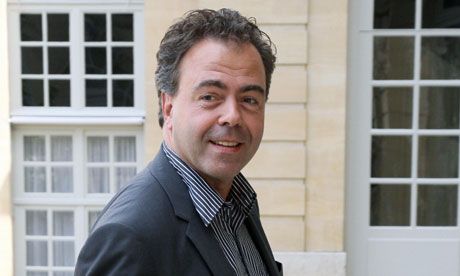
French Minister for National Education Luc Chatel is keen to start language learning in nurseries. Photograph: Mehdi Fedouach/AFP/Getty Images


Children could start learning English in France's nursery schools from age three as part of a strategic review of language education launched by education minister Luc Chatel.

Chatel announced last month that he wanted to "reinvent the learning of English" in schools. He said a team of specialists were examining a range of options aimed at boosting young people's skills in English and other foreign languages.

Specialists would investigate starting learning from age three, he said. "We have been experimenting with this and there have been some good results," he said.

He also wants to develop online language learning and to encourage more secondaryschool children to go on language-study trips to English-speaking countries.

But the minister's commitment to high-quality language teaching has been called into question. As part of cuts to education budgets announced last month, schools are likely to lose up to 1,000 specialist language assistants from classrooms from the start of the next academic year.

According to the Le Monde newspaper, educationalists are sceptical about using computers for language learning from such a young age. "Putting three-year-olds in front of computers?" asked Christian Chevalier, general secretary of the SE-Unsa teachers' union. "We are not opposed to developments in teaching that are useful. But you need a human to impart knowledge. Only a high-quality teacher who can speak English can teach the language," he said.

Philippines investigates collusion with fake schools

The Philippines bureau of immigration last month launched an internal investigation into the conduct of some of its officers, who are alleged to have helped bogus English language schools bring students into the country from South Korea.

Bureau acting commissioner Ronaldo Ledesma told the Philippines News Agency that a surge in the number of foreign nationals who were studying without permits could be linked to immigration staff working with language schools.

Ledesma said the investigations followed the recent arrest of 86 South Koreans and two Japanese minors found studying without visas. Last month 70 South Korean minors were held after a raid on a school at a resort in Batagas province, PNA reported.

US publisher to target mobile learning in India

US education publisher McGraw-Hill is to collaborate with technology services provider Wipro to deliver training content, including English language lessons, via mobile phones and laptops to users in developing countries. The mConnect platform will be piloted in India.

Meanwhile, US dictionary publisher Merriam-Webster has launched a version of its English language dictionary for iPhone users with voice recognition. Merriam-Webster claims that the free app allows users to look up a word by speaking it into their handsets.

Rwanda threatens teacher training truants with sack

Rwanda's ministry of education has warned teachers who failed to take part in a five-week English proficiency training course that they could be sacked.

Over 50,000 teachers were expected to take part in training as part of a national strategy to introduce English as the medium of instruction in schools. According to the government, 96% of teachers enrolled in the session, which ended in December.

Emmanuel Muvunyi, executive secretary of the teacher service commission in Kigali, told the New Times newspaper: "We know [the teachers] and we are going to take appropriate measures."

Max de Lotbinière
max.delotbiniere@guardian.co.uk

The Eric Friedheim Library: Events and Classes

Business Affiliate Programs •  Sale •  Personals •  Advertising •  Shopping

LinkWithin

Related Posts Plugin for WordPress, Blogger...