Showing posts with label children. Show all posts

Monday, April 4, 2011

Over a lakh children in Delhi still out of school

New Delhi: More than one lakh children in the national capital are still out of school, a report by the human resource development ministry said as the Right to Free and Compulsory Education (RTE) Act completed a year on Friday since its implementation.

The RTE report card which analyzed the primary education scenario in the country was released especially for the occasion.

According to the report, 1,24,022 children in the age group of six to 14 were out of school in Delhi, as per a survey in 2009. Across the country, the out-of-school children figure stands at 81,50,619.

"It's unfortunate that 81,50,619 children in the age group of six to 14 are still out of school. We have to bring all those children to school," Human Resource Development Minister Kapil Sibal said while releasing the report.

On a positive note however, Delhi has scored quite well in other parameters.

For instance, as compared to national figure of pupil-teacher ratio of 32, in Delhi the ratio is 28. Then, at the national level the percentage of teachers without professionalqualification is 21, but in Delhi it stands at one.

Water drinking facility is present in 100 percent schools in Delhi. 79 percent schoolshere have girls toilets, 71 percent schools have ramps for disadvantaged students, 75 percent schools have playground and 98 percent have boundary walls.

Delhi is one of the 11 states which have constituted a state commission to monitor implementation of the RTE Act. Notification of the state rules however is still "in process", the report said.

A total of 16,84,425 students have been enrolled in the primary level in Delhi and 9,82,164 in the upper primary level. Delhi has 3,034 government and aided schoolsand has 57,777 teachers in these schools.

Wednesday, March 2, 2011

21st Century Tools for Iraqi School Children: UNESCO Launches Distance Learning

Satellite TV and an online educational resource are two new tools supporting education in Iraq. UNESCO, with the support of the European Union and in cooperation with the Ministry of Education, announced the formal opening of The Iraqi educational Television (Iraqi Edu at Nile Sat) and The Iraqi Curricula Website (www.iraqicurricula.org) at a ceremony in Baghdad on Wednesday the 23rd of February, 2011.

“What make our present era remarkable are the number, variety and importance of means of communication and information in presenting information and ideas, in such easiness and high speed, in addition to the elements of suspense it carries in order to break the routine and benefit from previous experiences that contributed to the process development of the transfer of audiovisuals to the recipient” Minister of Education Dr. Mohammad Ali Tamim said in his speech.
 
Within The Educational TV programming, UNESCO established two TV production / broadcasting studios with a satellite transmission unit, produced 624 TV lessons, provided a total of 725 hours of externally produced TV programs for Iraqi students and produced 24 episodes of Abu Salam Family, an animated series of 24 episodes focusing attention on civic values, gender equality and human rights. In addition, UNESCO established a TV library and trained all the TV station staff each in his own specialty.

The Iraqi Curricula Website is an online resource with links to all relevant educational materials covering learning from primary to secondary schooling. Among the features of the website are resources for literacy, accelerated learning for students who have missed school and need to catch-up, along with teacher guidebooks and all of the Educational TV programs, including The Abu Salam Family series.

“Combined, the website and Educational TV, give school age children, no matter where they are in the world, an opportunity to learn. This is a commitment to learning for the children of Iraq and an investment in Iraq’s future,” said Mohamad Djelid, director of the UNESCO Iraq Office.

Since 2003, Iraq has struggled to resuscitate the education sector after years of neglect. “This commitment to education is about making a down payment on tomorrow,” said Mr. Jerzy Skuratowicz, Deputy Special Representative of the Secretary General of the United Nations, adding, “the progression is simple: education leads to opportunity, opportunity leads to progress, and progress leads to a brighter future for Iraq and the region.”
 
UNESCO, along with UNICEF, UN-Habitat, The World Bank and our Iraqi counterparts, has worked tirelessly to restore the reputation of the educational system that was once the most respected in the Arab world. These two resources immediately address the needs of students who have been unable to regularly attend class due to war or insecurity. The satellite TV programs have a regional footprint and by the nature of the internet, all Iraqis no matter where they live can access educational material and programs from a computer.
 
“The new educational TV will make the official curriculum available to everybody who has access to television. And here we are talking about almost 90 % of the population in Iraq and even more in the Diaspora.” Said Mr. Jobst von Kirchmann, EU - Head of Cooperation.
 
Source:
http://www.unesco.org/en/iraq-office/dynamic-content-single-view/news/21st_century_tools_for_iraqi_school_children_unesco_launches_distance_learning/back/9623/cHash/b0cdb12149/

France wants to 'reinvent' English language teaching from age three

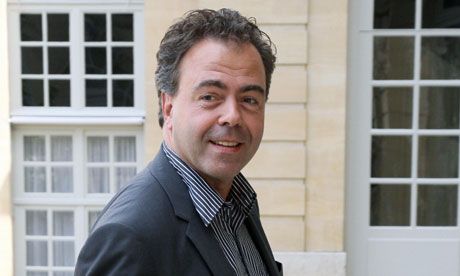
Children could start learning English in France's nursery schools from age three as part of a strategic review of language education launched by education minister Luc Chatel.

Chatel announced last month that he wanted to "reinvent the learning of English" in schools. He said a team of specialists were examining a range of options aimed at boosting young people's skills in English and other foreign languages.

Specialists would investigate starting learning from age three, he said. "We have been experimenting with this and there have been some good results," he said.

He also wants to develop online language learning and to encourage more secondary school children to go on language-study trips to English-speaking countries.

But the minister's commitment to high-quality language teaching has been called into question. As part of cuts to education budgets announced last month, schools are likely to lose up to 1,000 specialist language assistants from classrooms from the start of the next academic year.

According to the Le Monde newspaper, educationalists are sceptical about using computers for language learning from such a young age. "Putting three-year-olds in front of computers?" asked Christian Chevalier, general secretary of the SE-Unsa teachers' union. "We are not opposed to developments in teaching that are useful. But you need a human to impart knowledge. Only a high-quality teacher who can speak English can teach the language," he said.

The Eric Friedheim Library: Events and Classes

Business Affiliate Programs •  Sale •  Personals •  Advertising •  Shopping

LinkWithin

Related Posts Plugin for WordPress, Blogger...